Spring Boot

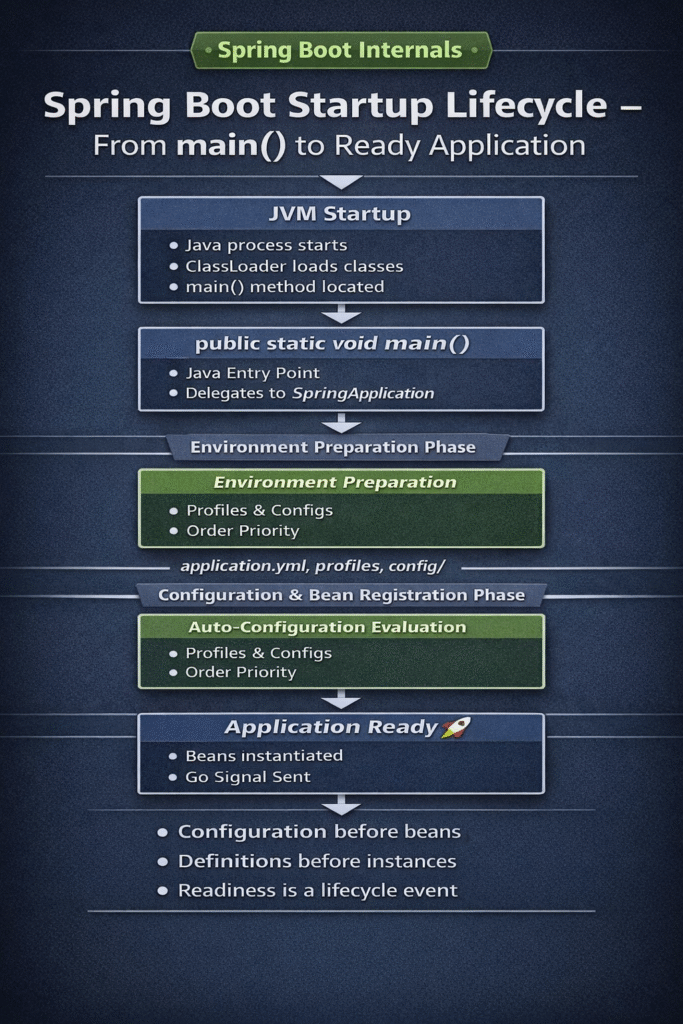
Spring Boot startup lifecycle showing the flow from main() method through SpringApplication.run(), environment preparation, application context creation, bean initialization, and application ready state

Spring Boot Startup Lifecycle — From main() to a Ready Application

Spring Boot is one of the most widely used frameworks in modern Java backend systems. Most developers use it daily, yet very few truly understand what actually happens when a Spring Boot application starts. This article explains the Spring Boot Startup Lifecycle in detail, from the JVM invoking main() to a fully ready application. In […]

Spring Boot Startup Lifecycle — From main() to a Ready Application Read More »
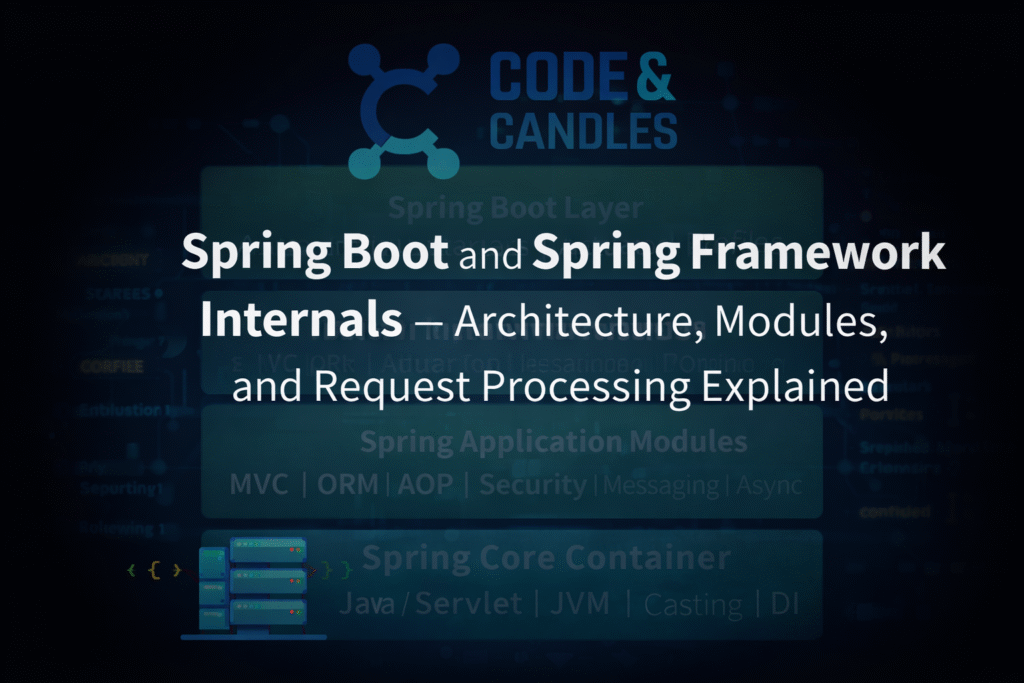
Spring Boot and Spring Framework internals feature image showing layered architecture, core modules, and HTTP request processing flow.

Spring Boot and Spring Framework Internals — Architecture, Modules, and Request Processing Explained

Spring is one of the most widely used ecosystems for building enterprise Java applications, yet many developers use Spring Boot daily without fully understanding how Spring actually works under the hood. Spring Framework is a foundational Java framework that provides inversion of control (IoC), dependency injection (DI), transaction management, and infrastructure support for enterprise systems.Spring

Spring Boot and Spring Framework Internals — Architecture, Modules, and Request Processing Explained Read More »

REST API Performance Optimization: Concepts, Tradeoffs, and Best Practices

REST APIs are the backbone of modern distributed systems. Whether powering mobile apps, web frontends, or microservices, their performance directly impacts latency, throughput, scalability, and overall system reliability. REST API performance optimization requires analyzing every layer in the request lifecycle—client, network, server, application logic, and data access—to reduce bottlenecks and improve p95/p99 tail latency. This

REST API Performance Optimization: Concepts, Tradeoffs, and Best Practices Read More »